Somerset 321 Orchard Road #07-07 | WHATSAPP (65) 8011 1811 | Ngee Ann City Tower B #08-05A | WHATSAPP (65) 8712 0888

Somerset 321 Orchard Road #07-07 | WHATSAPP (65) 8011 1811 | Ngee Ann City Tower B #08-05A | WHATSAPP (65) 8712 0888

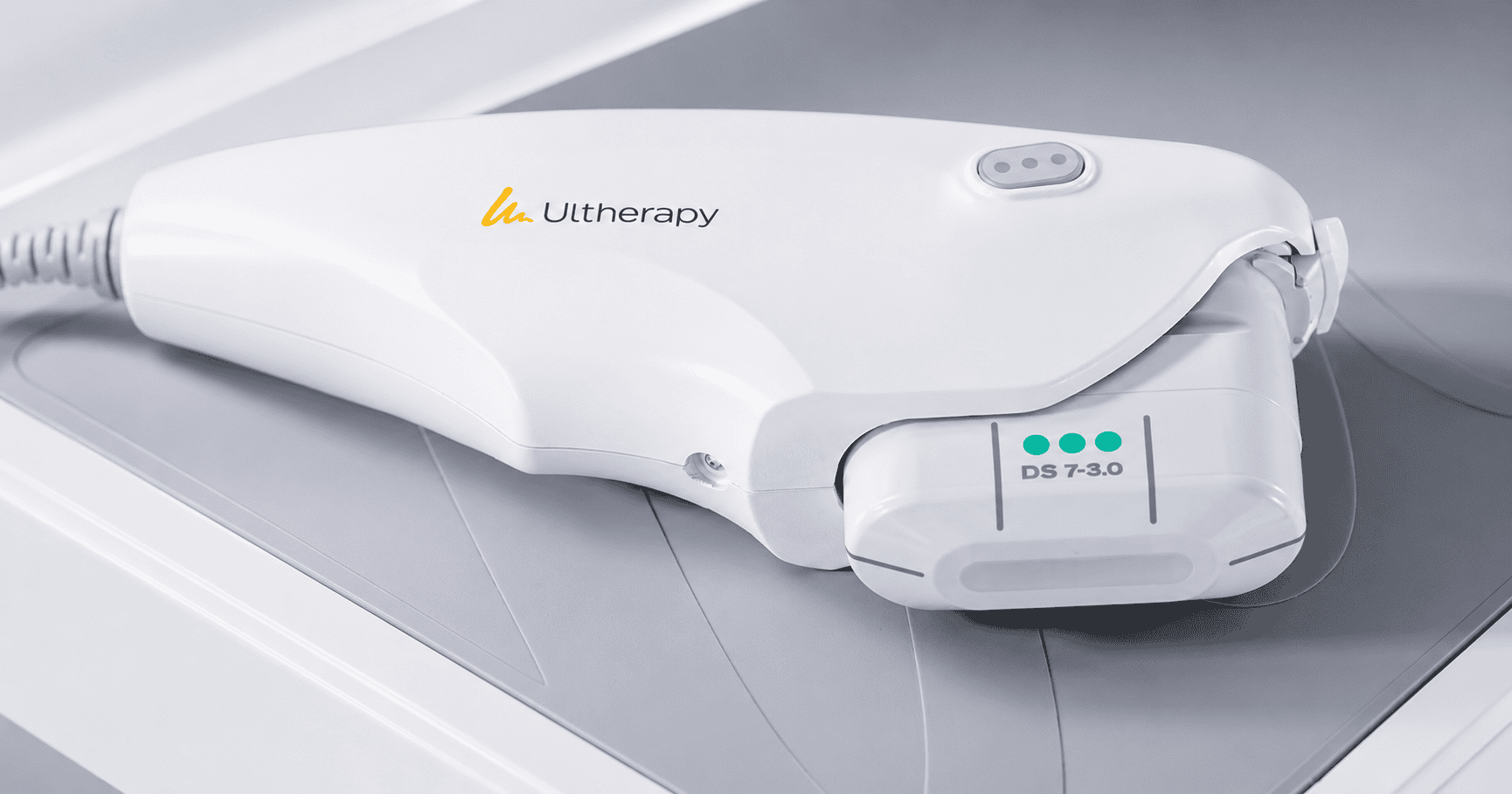
Skin firmness doesn't disappear overnight. Collagen output starts tapering off in your mid-20s, and by some estimates, the body has lost around a quarter of its collagen production by the time four decades have passed. The visible signs are sagging, looser contours, and a change in texture. These usually show up long after the underlying support has already started to thin.
Non-surgical skin tightening treatments are designed to work with biology, prompting the skin to rebuild collagen and elastin rather than replacing lost volume from the outside. But "skin tightening" covers a wide range of technologies, and Titanium Lifting, Ultherapy PRIME, HIFU, and radiofrequency treatments don't all work the same way. The real differences come down to three things: the type of energy used, how deep it reaches, and which layer of tissue it's built to target.
| Treatment | Energy Type | Mechanism | Tissue Depth | Defining Feature |
| Titanium Lifting | Triple-wavelength laser (755nm, 808nm, 1064nm) | Heats the dermis to stimulate collagen and elastin across several skin layers | Surface to mid-dermis | Addresses tone, texture, and firmness in one pass with built-in cooling |
| Ultherapy PRIME | Microfocused ultrasound (MFU-V) | Delivers energy to selected depths to trigger collagen regeneration down to the SMAS | Superficial dermis (1.5mm), deep dermis (3mm), SMAS (4.5mm) | Real-time imaging before energy delivery; US FDA-cleared for lifting |
| HIFU | Focused ultrasound (device-dependent) | Heats skin and SMAS-level tissue to stimulate collagen remodelling | SMAS or deep dermis, depending on the device | A broad category; depth, output, and regulatory clearance vary widely by device |
| Radiofrequency | RF energy | Heats the dermis broadly to encourage collagen remodelling | Dermal layer | No real-time imaging; suited to general firmness and texture rather than structural lifting |
The clearest way to separate these four options is by asking which layer of skin they're actually reaching.
Ultherapy PRIME goes deepest, reaching the SMAS (superficial musculoaponeurotic system) at 4.5 mm, the fibrous layer that holds facial structure and contour in place. No other non-surgical option on this list targets that layer as its primary focus.
Titanium Lifting works across the surface and mid-to-deep dermis, addressing several layers in a single session but staying shallower than the SMAS.
Radiofrequency stays within the dermal layer.
HIFU sits somewhere in between, targeting either the SMAS or the deep dermis depending on the specific device and its settings.
This is also why Titanium Lifting and Ultherapy PRIME are frequently paired rather than pitted against each other in Singapore clinics; one refines the surface and mid-layer, the other lifts from the structural layer beneath. They're not competing for the same job.
| Treatment | Comfort Level | Session Length | Downtime |
| Titanium Lifting | Generally comfortable; integrated cooling manages heat | 20–30 minutes | Minimal. Possible mild redness for a few hours |
| Ultherapy PRIME | Some sensitivity around the jaw and forehead; numbing cream used beforehand | 60–120 minutes | Minimal. Most return to normal activities same-day |
| HIFU | Varies by device generation and operator | Varies by device | Varies by device |
| Radiofrequency | Generally well-tolerated warming sensation | Varies by device | Minimal for most patients |
| Treatment | Result Timeline | Recommended Course | Duration |
| Titanium Lifting | Some early changes within weeks; collagen results build over months | 3–5 sessions, spaced 3–4 weeks apart | Varies by individual and aftercare |
| Ultherapy PRIME | Gradual improvement over 3–6 months as collagen builds | Single session. Maintenance around 6–12 months | 6–12 months (per clinical and manufacturer data) |
| HIFU | Broadly similar to Ultherapy PRIME for SMAS-targeting devices; varies | Depends on device and protocol | Varies by device |
| Radiofrequency | Gradual remodelling over weeks to months | Varies by device | Varies by individual |
A comparison table can only tell you so much; the right course and timeline depend on your skin's condition and your specific goals. A consultation at Cambridge Medical is the way to get a clear, individualised answer.
It's more useful to think of Titanium Lifting vs Ultherapy PRIME as a question of depth rather than a contest with a winner. Because they work on different layers, pairing them lets one treatment plan cover both structural lift from below and surface-level refinement from above, an approach that's well established in Korean aesthetic clinics and gaining ground in Singapore.
Combining the two isn't necessary for every patient. At Cambridge Medical, both treatments are available individually or together, and our doctors can assess which approach, single-modality or combined, fits your specific concerns.
Book a consultation with Cambridge Medical to discuss your skin concerns and treatment options.
However you're leaning, these are the questions worth raising before deciding on a treatment:
They're not directly comparable; they use different energy types and reach different tissue depths. Which one suits you depends on your specific concern and, in the case of HIFU, the exact device being used.
Some patients do receive both as part of a combined treatment plan. This depends on an individual skin assessment and your treating doctor's recommendation.
Titanium Lifting results vary by individual, and a course of 3–5 sessions is typically recommended. Ultherapy PRIME results are generally maintained for 12–18 months based on clinical and manufacturer-reported data, though outcomes vary between patients.
Generally well-tolerated, the procedure features integrated cooling technology to manage thermal sensations effectively. While individual experiences vary, patients typically notice a manageable warmth or slight tingling. Although numbing cream is generally not necessary, it remains an available option for those prioritising maximum comfort during their session.
These technologies operate on fundamentally distinct energy platforms. While Titanium Lifting utilises a triple-wavelength laser system and monopolar RF relies on radiofrequency energy, both are engineered to stimulate dermal collagen production. The suitable approach for your skin depends on a professional assessment and clinical consultation.
| Treatment | Energy Type | Primary Target | Best Starting Point If... |
| Titanium Lifting | Triple-wavelength laser | Surface to mid-dermis | Your main concern is tone, texture, or mild laxity |
| Ultherapy PRIME | Microfocused ultrasound | Deep dermis and SMAS (4.5mm) | You're concerned with structural position: brow, jawline, neck, under-chin |
| HIFU | Focused ultrasound | SMAS or deep dermis | You're still exploring. Ask about the specific device and its clearance |
| Radiofrequency | RF energy | Dermal layer | You want general firmness and surface improvement, not structural lift |
Ultimately, the right treatment depends on which layer of your skin needs the most attention, and that calls for a proper skin assessment rather than a side-by-side table comparison alone.
Cambridge Medical (Somerset) offers Titanium Lifting, Ultherapy PRIME, and Radiofrequency options. Because every skin profile is unique, a professional consultation is the most effective way to determine which clinical approach aligns with your specific aesthetic goals.


Tel +65 6733 0777
SMS/Whatsapp +65 8712 0888

Mon to Fri 10am – 7:30pm
Sat 10am – 3pm
Sun and PH Closed
Tel +65 6937 6977
SMS/Whatsapp +65 8011 1811
Mon to Fri 10am – 7:30pm
Sat 10am – 3pm
Sun and PH Closed
Member of Beyond Medical Group
Copyright 2026 © Cambridge Medical Group (A subsidiary of Beyond Medical Group) | Terms & Conditions